

What Kind Of Animals Are Found In The Owl Pellet Ecosystem?
AUSTRALIAN CURRICULUM ALIGNMENT:
- Ecosystems consist of communities of interdependent organisms and abiotic components of the surroundings matter and energy period through these systems
- Exploring interactions between organisms such as predator/prey, parasites, competitors, pollinators and affliction
Groundwork:
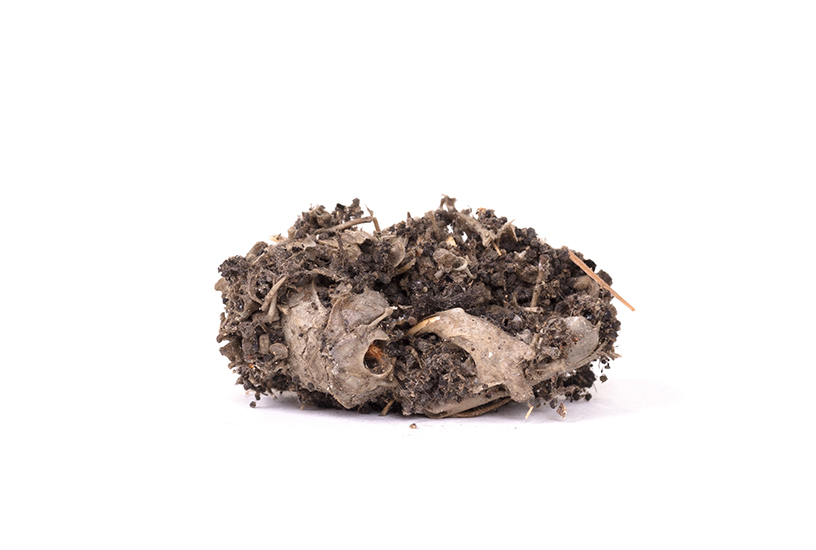
Owls are birds of casualty that chase during night-time, and frequently swallow their grab whole. When they are not able to eat their casualty whole, information technology is ingested in large pieces. Later on information technology is swallowed, the prey travels down to the Owl's stomach. Their unique stomach physiology includes the Proventriculus (the upper portion) and a Ventriculus or Gizzard (lower portion). During the outset phase of digestion, the acids and enzymes within the Proventriculus partially assimilate the prey. The remains then travel to the Gizzard, whereby the indigestible parts of the prey; such as hair, basic, teeth, and feathers, are compressed to form a matted pellet. The pellet and then re-enters the Proventriculus to remain there until the Owl regurgitates it as a pellet. Common barn Owls typically produce 1 or 2 of these pellets a solar day. Owls are nocturnal hunters and survive on a diet of rodents, such as Mice, Rat and Voles. Due to their hunting efficiency and ability to reduce rodent populations, some farmers intentionally attract Owls to inhabit their country by constructing artificial nests.
In this practical, students written report befouled owl pellets expect for testify for predator–prey relationships and ecosystems. Dissecting owl pellets is the best way to learn about their diet, casualty region and habitat. Their pellets tin be used to determine relative numbers of small animals constitute in an owl's feeding area. Students are tasked with dissecting an owl pellet and identifying the origin of the bones located inside it. After counting the number and variety of prey found inside their pellets, students summate the average nutrition of a barn owl using the class data. Students rail free energy flow and biomass in owls to explore the concepts of matter and free energy conservation, interdependence between organisms within ecosystems, and predator/prey relationships.
METHOD:
Barn Owl Pellet Dissection
- Unwrap your owl pellet and place information technology on a make clean tray. Note the colour, size and texture of the pellet.
- Carefully carve up the bones from the fur using wooden probes and dissecting forceps.
- Identify and categorise the basic, based on type of bone and the creature it came from. Utilize the Owl Pellet Bone Chart available online to do this. Mice and rats have very like bone structures. The main difference is size. A rat will be approximately twice the size of a mouse. Use this data to tell them apart.
- Record this information in a table like Table ane.
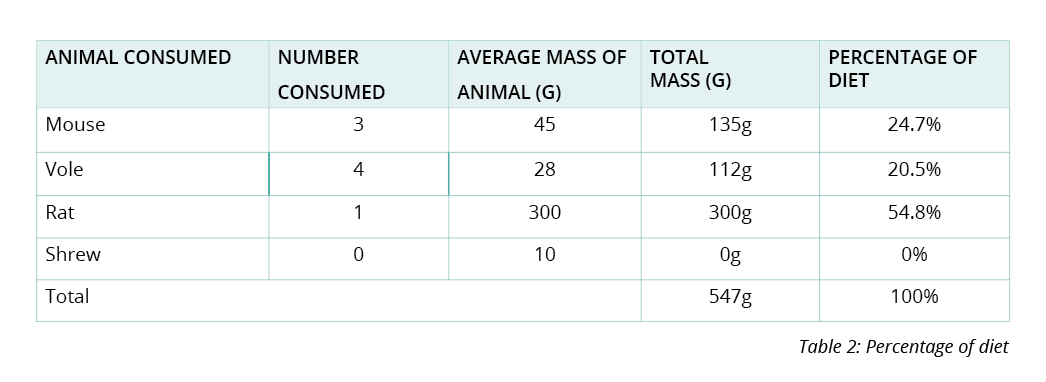
- For the US-sourced pellets y'all are using, the average befouled owl'south nutrition is approximately 50% voles, xl% mice, v% rats and v% shrews. Barn owls typically regurgitate two pellets a 24-hour interval, with each pellet more often than not containing iv skulls. Based on the results of your autopsy, determine the type and quantity of animals the owl consumed over 2 days. Get together data from another group to represent the second pellet. Using but whole numbers, record the figures in a data tabular array similar Tabular array 2.
- To continue to fill out the table, calculate the following: a) the full mass of food consumed past the owl daily b) the percentage of mass each blazon of consumed casualty contributes to the owl's total daily consumption.
- Based on the assumption the owl weighs 550 k, summate the percentage of the owl'due south body weight it consumed.
OBSERVATIONS AND RESULTS
Tabular array ane: Owl Pellet Dissection Results
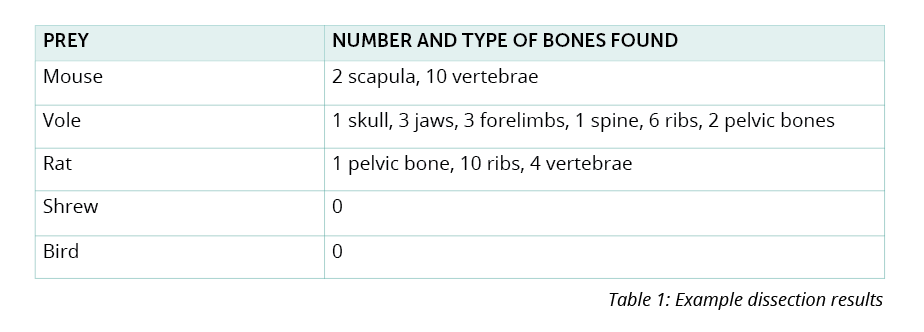
Table ii: Calculating Percentage of Diet
Private results will vary. Below is an instance of expected results. Students may detect bird bones within the pellet, however nosotros recommend disregarding them from the data fix, equally it tin can exist difficult to calculate the average mass of the beast as the size of birds can vary greatly depending on the species..
INVESTIGATIONS:
Using Tabular array 3, construct a diagram of a food web (of at least v animals), with an owl at the acme trophic level. Use arrows to prove which organisms are consumers and which are predators. Ensure you lot label the trophic levels and class of consumer. Include the Sunday as the energy source for plants.
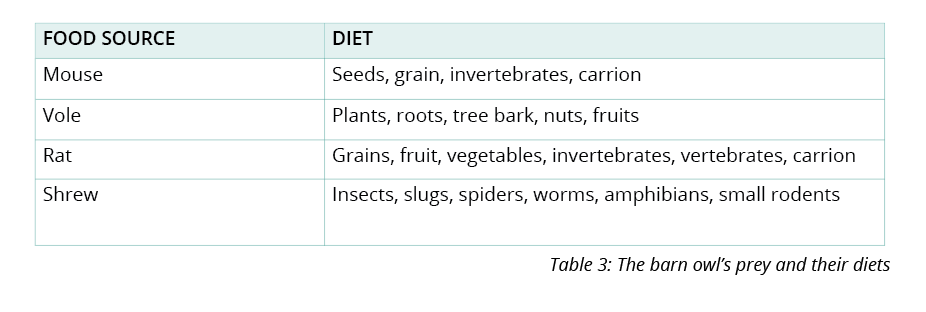
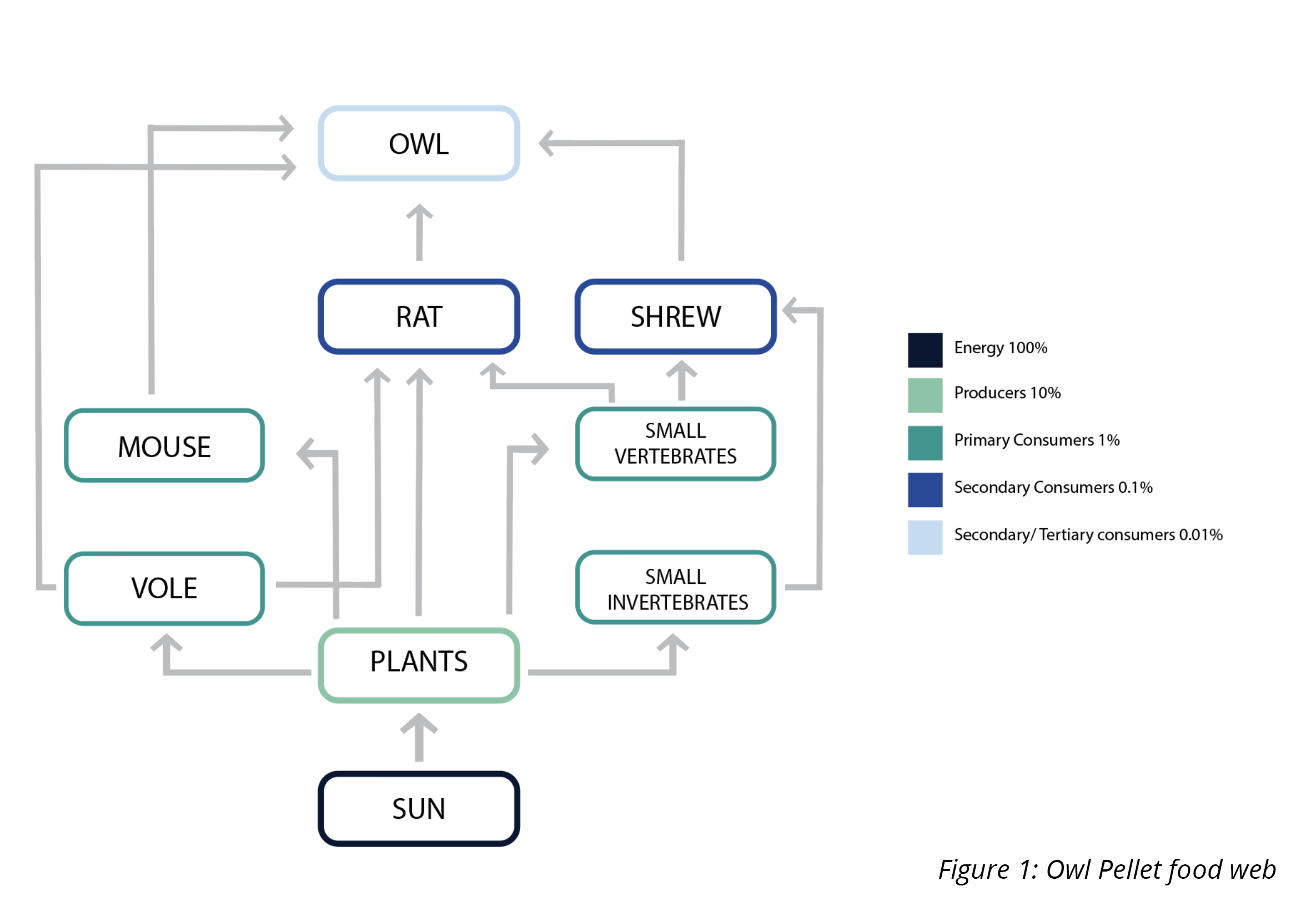
- Using the information in the food spider web, place the pattern in nutrient mass consumed for the primary and secondary consumer trophic level.
- Consider how the pattern of food mass consumed for the chief and secondary consumer trophic level tin be explained using the laws of conservation of matter and conservation of energy.
- Imagine what would happen if an owl consumed only rats. How would this affect the food web? Draw how the number of trophic levels and the percentage of initial free energy transferred to the owl would be affected.
- Illustrate a unproblematic food concatenation. The food chain should include a predator and a prey. Is the predator considered to be lower or higher on the chain?
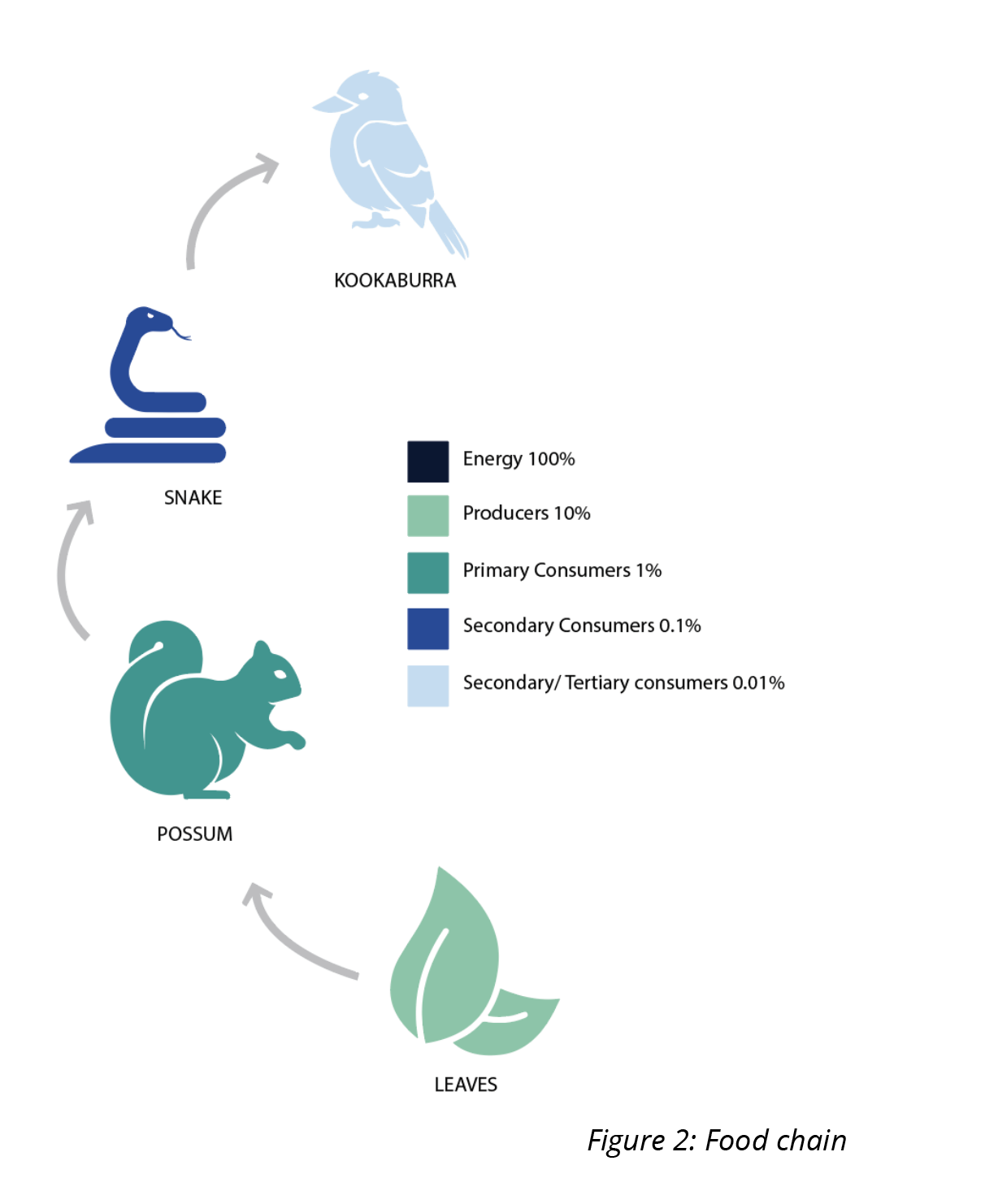
- What is the source of the free energy that enters a food chain?
- Which is more sustainable over time, an ecosystem with a unmarried food chain or ane with a food web?
- Owl pellets not just give us information about the diet of the owl, merely also provide a habitat for other animals. An owl pellet is a little ecosystem all on its own. Describe the kind of organisms that are found in the owl pellet ecosystem.
TEACHER TIP:
- Go on to check student calculations throughout the activity. Yous may wish to provide students with a formula canvas for percentages and converting percentages into decimal numbers.
Source: https://www.southernbiological.com/owl-pellet-food-webs/
Posted by: robinsonadardly84.blogspot.com
0 Response to "What Kind Of Animals Are Found In The Owl Pellet Ecosystem?"
Post a Comment